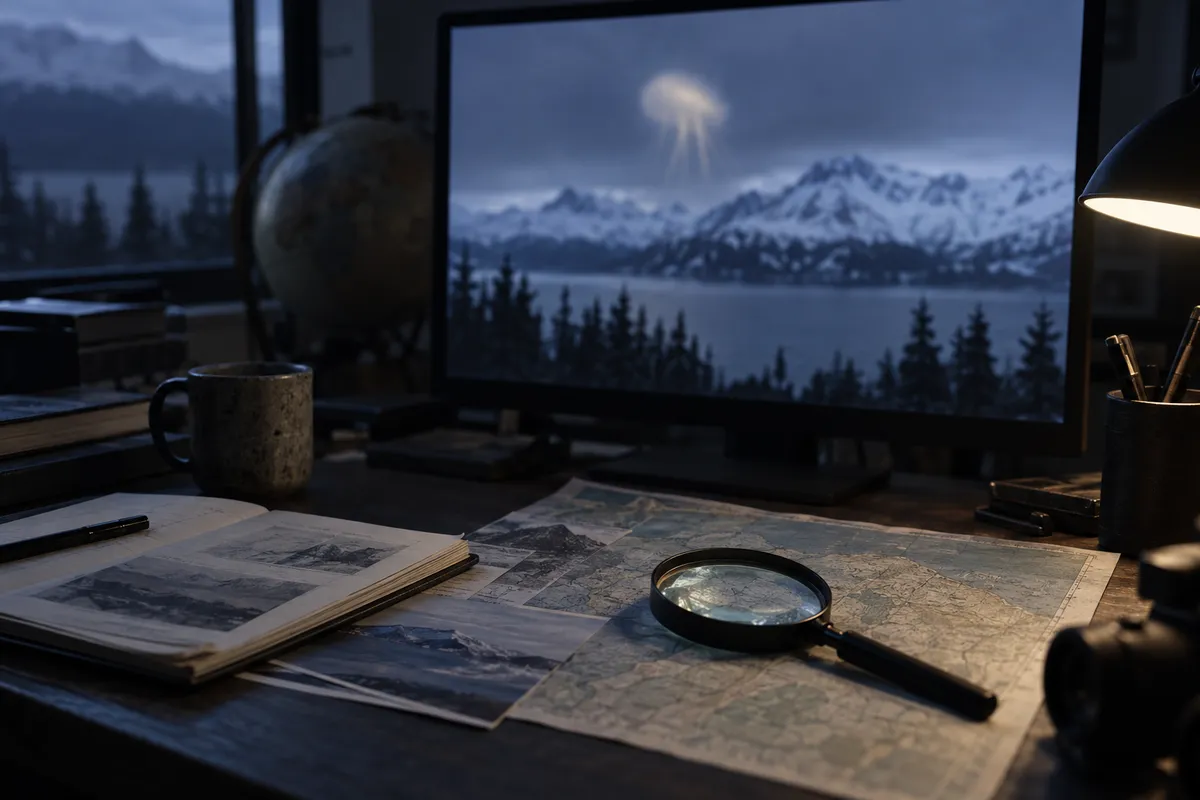
A strange shape over Alaska. A nickname that sticks in seconds: the "jellyfish" UFO. And one of the best-known journalists on the UFO beat telling everyone to slow down.
Per NewsNation, Ross Coulthart wants a closer look at the reported Alaska "jellyfish" sighting before anyone delivers a final verdict. That is the whole peg, and it is the most useful thing in the story. By the end of this piece, you will have a practical way to hold a case like this: what is actually on the record, what is missing, and how to avoid being swept along by the first dramatic frame of footage.
What Is Actually On the Record
Here is the short, attributable version. A sighting in Alaska has been described as a "jellyfish" UFO. Coulthart, appearing on NewsNation, says it deserves closer examination. He is not declaring it extraordinary, and he is not declaring it mundane. He is asking for more scrutiny first.
That is all I can responsibly state. The coverage I have does not include the date of the sighting, who captured it, the equipment used, or any official response. I will not invent those details to make the story feel fuller. Their absence is itself part of the story, and it is the first thing you should notice when a case goes viral.
Why "Wait" Is the Most Interesting Word in This Story
UFO stories usually arrive in two flavors: breathless proof or instant dismissal. Coulthart's stance is a third thing, and it is rarer. He is saying the evidence has not yet been examined enough to call it either way.
That matters because the nickname does a lot of work. "Jellyfish" is a vivid image. It suggests tentacles, drifting motion, something alive or alien. A good label can make a blurry object feel like a settled description before anyone has verified what the object is. My own take: the name is memorable, but a name is not an identification.
How to Judge a Viral UAP Clip Yourself
You do not need a lab to apply discipline to a sighting. Use these checks on any clip, this one included.
1. Find the original source
Who filmed it, and where did it first appear? A clip passed along through reposts loses its context quickly. Original files carry data that edited copies strip away.
2. Ask what else it could be
Experts urge caution on viral UAP footage for a reason: cameras distort. Lens effects, distance, compression, and unusual lighting can all make ordinary things look strange. A responsible investigator lists the mundane explanations first and tries to eliminate them one by one.
3. Look for a second witness
One camera is a clue. Two independent angles, radar data, or other records are far stronger. If a case rests on a single clip, treat it as unresolved.
4. Watch for the missing details
Time, location, direction, and duration. If those are vague, the case cannot be tested. Vague cases are the ones that stay mysterious forever, not because they are unexplainable but because they are unexaminable.
5. Notice your own reaction
If you feel certain within ten seconds, that is the nickname and the mood talking. Let the evidence catch up.
The "Jellyfish" Label Is Not New
The nickname suggests this is not the first time observers have reached for marine imagery to describe odd aerial objects. The coverage I have does not detail those earlier reports, so I will not list them or claim they match. But the pattern is worth a thought. People describe the unknown using familiar shapes, and familiar shapes can bias both witnesses and audiences. Comparing cases is valuable only when the underlying data is compared, not just the comparison-friendly name.
Why This Keeps Landing in Mainstream News
A reporter urging patience on a UFO clip, on a national news channel, tells you something about where the subject now sits. Public interest in UFOs and UAPs remains high, with new sightings, military-related claims, and media investigations continuing to push the topic into ordinary conversation.
That shift cuts both ways. Mainstream attention can drive better questions and more scrutiny. It can also reward the fastest, flashiest claim. Coulthart's call for a closer look is a small example of the better path: keep the mystery open, but make the evidence do the talking.
What We Know vs. What We Don't
Known: An Alaska sighting has been labeled a "jellyfish" UFO. Ross Coulthart, per NewsNation, says it warrants closer examination before a final verdict.
Not known, at least from the coverage available here: What the object is, who recorded it, whether any official body has weighed in, and whether independent data supports it.
That gap is not a failure of the story. It is the honest state of the case.
The Takeaway
When the next strange clip hits your feed, do what Coulthart is asking here: hold your verdict. Trace the source, list the ordinary explanations, and wait for the closer look before you decide what you saw.