Theban Tomb 209, nestled near Luxor, Egypt, isn't just a relic of the past; it’s a testament to evolving cultural practices. A recent study has unearthed how this burial chamber transformed from the Twenty-fifth Dynasty through the Ptolemaic period, and what it reveals about ancient Egyptian rituals surrounding death and memory. This exploration challenges traditional perceptions of ancient tomb reuse as mere chaos, instead highlighting a thoughtful adaptation in burial practices.
The Evolution of a Burial Chamber
Researchers have meticulously documented changes within Theban Tomb 209, showing that despite the appearances of crowded later burials, these adaptations weren't random. Over the centuries, as bodies were added to the burial site, there was a clear following of an evolving “funerary memory.” This concept includes the intentional placement of remains and objects that reference earlier traditions, giving us insight into the complex society of ancient Egypt and its views on death.
The study illustrates how the tomb's architecture and burial positioning evolved in response to societal changes, each generation adding layers to the existing funerary narrative. Each burial represented a continuation, a respectful integration of the past while maintaining communal memory.
More Than Just Burials: A Ritual Dance
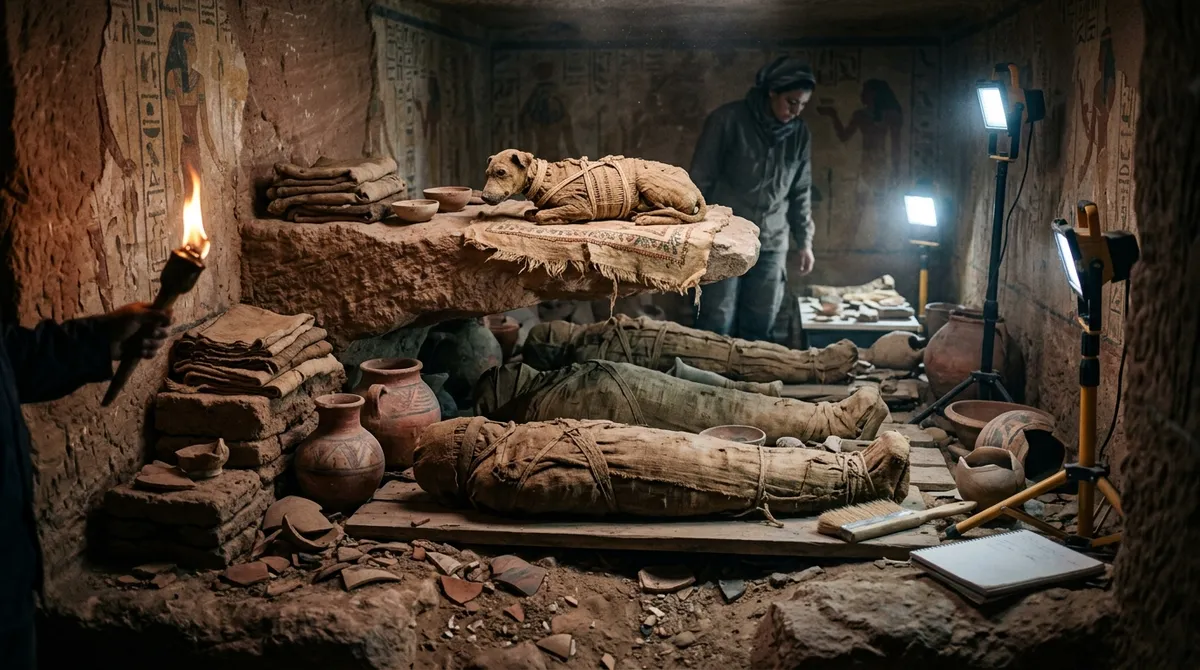
While many traditional views have portrayed these crowded tombs as merely disordered, the findings indicate a different story. The presence of mummified pets, like the dog found atop two human remains, suggests that ancient Egyptians considered pets significant for guiding their masters into the afterlife. These burials reveal a passionate adherence to rituals reflecting deep bonds between humans and animals, and a nuanced understanding of companionship in death.
This thoughtful construction of burial practices extends beyond mere logistics; it is essentially a social narrative that encapsulates layers of grief, love, and reverence. The Egyptians didn't just memorialize their deceased; they continually edited their sacred spaces to keep alive their collective memory.
A Reflection of Shifting Beliefs
The positioning of the bodies themselves within the tomb also uncovers shifting religious and social hierarchies. Different placement techniques offer a window into the evolving beliefs regarding the afterlife and status within society. As burial practices changed, so too did the way the Egyptians understood concepts like class, spirituality, and the continuity of memory.
These alterations over 700 years signify that death and memory were not stagnant; they were dynamic aspects of life that shifted based on cultural and societal growth. From rich burial protocols to the inclusion of beloved animals, the interaction of different beliefs highlights how layered and complex ancient Egyptian spirituality was.
The Impact of These Discoveries
The investigation into Theban Tomb 209 not only re contextualizes ancient employment of burial rites but re-engages modern fascination with mummies and the intrigue surrounding death. It bridges the gap between an ancient world steeped in rituals and contemporary interpretations of life after death. As these findings ripple through the field of archaeology, they invite us to reconsider our understanding of the past — emphasizing that history is not just recorded in tombs but is alive, adaptable, and ultimately a reflective process shared across generations.
In summary, the findings from Theban Tomb 209 allow us to view ancient Egyptian burial practices through a more compassionate lens. These rituals are not mere remnants of the past but vibrant stories of human connection and societal evolution, crafted over centuries of memory. Learning about their significance enriches our understanding of who we are today as we navigate our beliefs about life, death, and what lies beyond.